
Practical guide
Write a first vehicle brief that a shop can act on
Describe the business, vehicle and desired result without needing to know every production term.
Read the guide: Write a first vehicle brief that a shop can act onChicago commercial vehicles & fleets
Your first branded vehicle should make the business easy to recognize. Bring the message, vehicle and artwork into one clear plan.
Guaranteed response within 2 hours.Free planning tools and buyer downloads below.
A clear scope before the spend.
Free first vehicle project brief below. Use the result with any wrap shop.
More useful project detail
Turn a first vehicle idea into a usable launch brief. Organize the message, available artwork, vehicle evidence and open decisions before asking for production or scheduling.

A visual you can keep
A clear starting record leaves open decisions visible.
Use the planning example from Chicago Fleet Wraps, download a copy, or read the related project guides.
Practical guide
Describe the business, vehicle and desired result without needing to know every production term.
Read the guide: Write a first vehicle brief that a shop can act onPractical guide
Create a simple inventory of logos, colors, fonts and wording with their approval status.
Read the guide: Gather brand files before the first vehicle designPractical guide
Connect scope, artwork and vehicle readiness so the first visit has a clear purpose.
Read the guide: Plan the first wrap approval before the appointmentWhy put your business on a vehicle?
Gather the vehicle details, brand files and message that make the next conversation useful.
Choose the business name, main service and contact route before adding a long list.
Keep the approved wording and artwork reference for the next vehicle.
Picture the possibilities
Look at the message, the coverage and the working views.
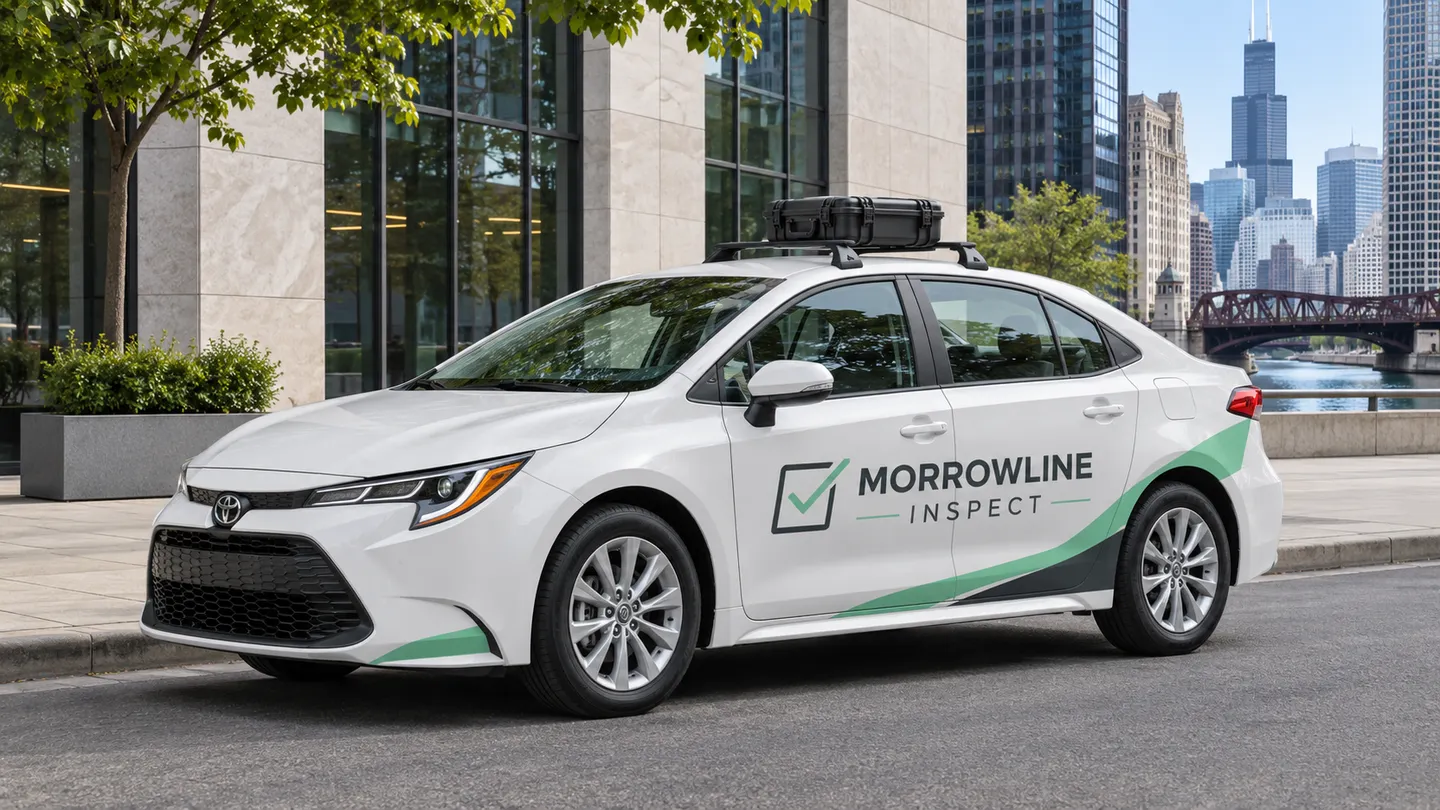
Morrowline Inspect is a fictional business. These generated design concepts illustrate ideas to discuss for your vehicles.
Plan the graphics for your vehiclesA clear scope before a price
Vehicle size, covered areas, artwork, preparation, existing graphics and the proposed material system all belong in the price discussion.
Useful when the priority is a clear name, service and contact route.
Discuss this scopeCompare the exact panels, message and finish with the full-coverage option.
Discuss this scopeConfirm the included painted panels and any exclusions on the actual vehicle.
Discuss this scopeRequest a price for the actual vehicles and agreed coverage. The free tools below help you compare the assumptions.
Let’s talk vehicles
Tell us how many vehicles you have. We’ll follow up about the vehicles, coverage, design and timing.
Guaranteed response within 2 hours.Know the next step
Guaranteed response within 2 hours. Final project pricing and dates follow review of the scope.
Name, email, phone and vehicle count. Share the project context through the free tool if it is useful.
Discuss the actual vehicles, coverage, artwork, existing graphics and timing.
Check the written scope and vehicle-specific artwork, including the business wording and included surfaces.
Confirm scheduling, preparation, review and the applicable care information.
The free tool
Use the example values to explore, then replace them with your project details.
Use the tool without sharing contact details. Entering a valid email or phone in the inquiry form saves your project entries, filenames, analysis and selected original files, even if unfinished. Original files: up to 50 MB each and 200 MB per batch.
Share this page with the person scoping the project.
Generating a brief does not approve artwork or reserve an installation date.
Ready to discuss the vehicles? Get fleet pricing. Save your result to use in that conversation.
Free tools for a better buying decision
A 12-page workbook with generic wrap concepts and fillable worksheets for coverage, quote comparison, budget, fleet availability, artwork, proof approval and vehicle records. Use it with any wrap shop.
Fill it in electronically or print it. No email needed.
Take this to any wrap shop
Print it off so you remember to ask. A practical checklist covering scope, materials, artwork, preparation, scheduling, warranty and handoff, plus questions for this project.
Confidence comes from the details
Use these checks when you review a proposal, a proof or a wrap shop. Keep the answers with your project.
Print the wrap-shop questionsSee the tradeoff
A first-time buyer can hand one organized brief to an estimator instead of sending scattered messages.
Illustrative values, not a completed customer project.
Share this page with the person scoping the project.
Generating a brief does not approve artwork or reserve an installation date.
Leave with something useful
Put the message, vehicle details and open decisions on one page before the first design conversation.
Build my first wrap briefBuild it from the project details you enter.
Keep the assumptions and open questions visible.
Copy, save or print the result for your next conversation.
Commercial wrap service
Prepare a first business vehicle wrap by confirming the brand identity, selecting one primary message, and documenting the exact vehicle. Then review coverage, surface condition, artwork responsibilities, and availability before approving production. A clear brief helps separate design decisions from preparation work and gives the quote a defined commercial purpose.
The first branded business vehicle often exposes decisions that have never needed a final answer: which logo file is current, how the service should be described, and which contact details belong in public. Resolving those questions makes the graphics project more useful. Whether the vehicle is a company car or a small work vehicle, begin with a focused commercial brief and a realistic view of the body surfaces available for the design.
Start with the best original logo files available rather than a screenshot copied from a social profile. Gather existing colors, type preferences, and any examples of how the business presents itself on invoices, signs, or its website. These materials help establish a coherent identity, but they do not automatically settle the vehicle layout. Decide what must remain consistent and what can be adapted to the body. If artwork needs rebuilding or a service description needs editing, make that part of the scope before treating the first proof as production-ready.
A first wrap can become crowded when it tries to introduce every service the business has ever provided. Select the identity, specialty, and contact route that matter most to the intended customer. Place secondary details only where they support that hierarchy. Review the message on the actual vehicle shape, including doors, wheel openings, and equipment that can interrupt the design. A larger printed area does not automatically make a longer message easier to understand. The proof should demonstrate how the important elements remain clear in the available commercial space.
Vehicle readiness and artwork readiness are separate parts of the same project. Provide photographs of old graphics, paint damage, repairs, and trim so preparation can be discussed early. Confirm when the vehicle can be made available and whether other work needs to happen first. Keep the final proof with a short record of the accepted coverage and installation assumptions. After the work, retain any supplied material and care information for future reference. That record becomes especially useful if the business later adds another vehicle or needs a component replaced.
Buy with the questions answered
You can start with the business message, vehicle details and any brand files you already have. Identify missing artwork or undecided coverage so that design work can be included clearly in the scope.
Guaranteed response within 2 hours. The next conversation confirms the vehicle details, proposed coverage, artwork, existing graphics and timing so a project-specific scope can be discussed. Sending an inquiry does not reserve an installation date.
Review the covered surfaces, final business wording, vehicle-specific artwork, proposed material system, preparation and removal needs, price exclusions and agreed handoff. The free wrap-shop questions give you a record to use with any supplier.
Before you decide
For project-specific help, use the four-field inquiry form.
Get fleet pricingIdentify that before approving the graphics scope. Artwork may need to be recreated or a better source file located, and those tasks should be discussed separately from installation. An enlarged screenshot can reveal quality problems, so the proof should use artwork suitable for the intended output.
Read the detailed guide: Gather brand files before the first vehicle design
A concise main message is usually a more useful starting point than a complete service directory. Choose what the intended customer needs to understand first, then decide whether supporting details have a clear role. Review the hierarchy on the vehicle rather than judging the wording only in a document.
Read the detailed guide: Write a first vehicle brief that a shop can act on
Yes, its approved brand elements and layout decisions can become a starting reference for later vehicles. Keep the source files, accepted proof, and wording together. Future body types will still need their own review, because a design that fits one vehicle may need different proportions elsewhere.
Read the detailed guide: Write a first vehicle brief that a shop can act on
Check the company identity, contact details, spelling, service description, and placement on every displayed side. Confirm the correct vehicle version and coverage. Resolve remaining questions about preparation and excluded surfaces separately, because an approved visual proof does not by itself describe every installation assumption.
Read the detailed guide: Plan the first wrap approval before the appointment
Give the business name, primary service and a useful contact method a clear order. Concise fleet messaging helps the most important information stand out.
3M sourceCarry common colors, typography and messages across the fleet, then adapt placement to each vehicle. A layout that works on a trailer may need substantial changes on a cargo van.
3M sourceNew paint must cure according to its manufacturer's instructions. Flaking paint, repairs and unsound finishes need assessment before installation or removal; a wrap is not a repair for failing paint.
3M sourcePreparation, coverage, vehicle shape, existing graphics and the installation team affect downtime. Obtain a project-specific schedule before committing vehicles to a fleet rollout.
3M sourceFirst business vehicle projects can be discussed for commercial operations in Chicago, Berwyn, Forest Park, and Oak Park without suggesting additional storefronts. Tell us about your vehicles.